Avoid unnecessary peak costs. Smartly manage capacity with Power Schedules
At Maxem, we ensure that charging infrastructure not only works but performs optimally within the limits of capacity, costs, and usage. Power Schedules are a powerful tool in this regard.
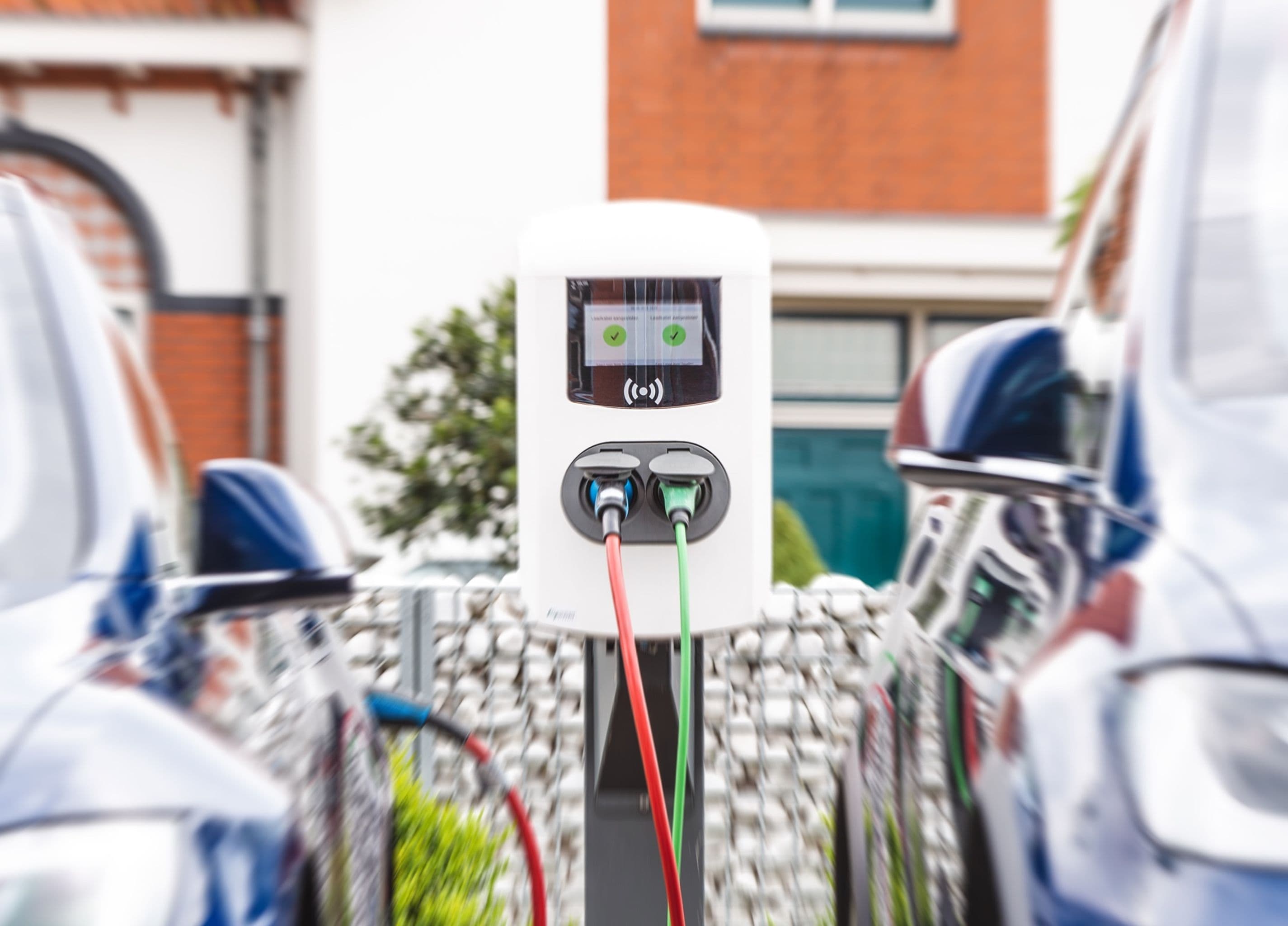
At Maxem, we ensure that charging infrastructure not only works but performs optimally within the limits of capacity, costs, and usage. Power Schedules are a powerful tool in this regard.
With Power Schedules, you determine when and how much power is available for your charging plaza. This allows you to actively manage peak load, energy costs, and grid capacity. It enables you to precisely align consumption with the time blocks of the energy supplier, by limiting power during expensive 'peak' hours and scaling up during 'off-peak' blocks to save costs.
In this blog, we further explain what Power Schedules are, the difference between manual and automatically recurring schedules, and when to use which variant.
What are Power Schedules? Power Schedules give you control over the available charging power at specific times of the day. The logic is simple: you align your charging strategy with energy prices, grid capacity, and usage.
You set, for example, that there is less power during expensive peak hours, adjusted limits during expected busy times, and you can charge maximally during off-peak hours.
Example:
In the Maxem Energy Cloud (MEC) dashboard, you set that between 09:00 and 11:00, you use a maximum of 30 kW to stay within favorable rates of your energy contract. Outside those hours, the system charges optimally.
The result: smarter use of capacity and up to 10% savings on charging costs.
Two variants of Power Schedules
1. Manual Power Schedules
How does it work? You manually set a power limit per time block via the Maxem Energy Cloud dashboard (MEC). If the situation changes, you adjust the schedule.
When do you use this?
• With fluctuating energy prices or contracts
• For temporary situations, e.g., events
• If you want to actively manage with current insights
• Maximum control and flexibility
• Directly adjustable to current situations
• Suitable for exceptions and customization
Limitations
• Requires active management
• Less scalable with multiple locations
‘The schedule is always correct, until someone forgets to reset it.’ 2. Recurring Power Schedules:
How does it work? With Recurring Power Schedules, you define a fixed pattern of time blocks and power limits. The system follows this schedule automatically, without manual intervention. The logic remains the same:
• capacity is limited during expensive peak hours
• maximum charging outside those hours
When do you use this?
• At locations with predictable usage patterns
• With fixed peak and off-peak rates
• If you want to minimize management
• Consistent and reliable control
• Efficient for larger or multiple locations
You have a block contract, with peak rates between 07:00 and 09:00 and between 17:00 and 19:00. You want to load less at those times. That schedule does not change, but it must be reset each time. That takes time and more importantly, if you forget once, your fleet charges at the most expensive time of the day. That is a problem we hear more often, especially from managers of multiple locations.
Or Flatten EPEX peak prices. The spot prices on the European energy market are published daily and have predictable patterns: expensive in the morning and early evening, cheaper during the day and at night. If you know these patterns, you set a recurring schedule once that limits power during expensive hours and maximizes charging during cheap hours. No manual action is needed anymore, the schedule works automatically every day.
Plus or performance: when to choose which variant?
In our SLB or DLB Plus subscription, you set Power Schedules manually. You have full control, but you need to keep thinking about it.
In our SLB or DLB Performance subscription, you work with Recurring Power Schedules. You set the schedule once and the system does the rest.
Plus is suitable if:
• Your schedule changes regularly (seasonal patterns, fluctuating contracts)
• You want to actively optimize based on current data
• You manage one or a few locations
Performance is suitable if:
• Your schedule is stable and repeats weekly
• You manage multiple locations and want to minimize operational overhead
• You want to automate energy optimization without relying on manual actions
Smart choices in practice The feedback we receive from fleet operators and property managers is consistent: setting the limits itself is not the problem, executing it consistently is.
Organizations often start with manual Power Schedules, providing control and insight into consumption and behavior, especially in the beginning phase. But once processes become stable, the need for automation arises.
Recurring Power Schedules take that work off your hands. No extra tools or integrations, just one setting in MEC that is automatically executed. Manual adjustments remain valuable for exceptions, but you automate the basis.
“We know exactly when it is advantageous to load less. But with ten locations and a team of three people, it's just not possible to keep track of it every week.”
Conclusion Power Schedules help to avoid peak costs and smartly utilize capacity. The real choice is not in the technology, but in the degree of automation that suits your operation.
At Maxem, we believe: the less you have to manage manually, the better your charging infrastructure performs.
Availability (Subscriptions)
Missed? Also read: [Priority Charging: when to choose charging point priority and when session priority?]